




Hospitality groups pivot from fine dining as rising costs force rapid closures
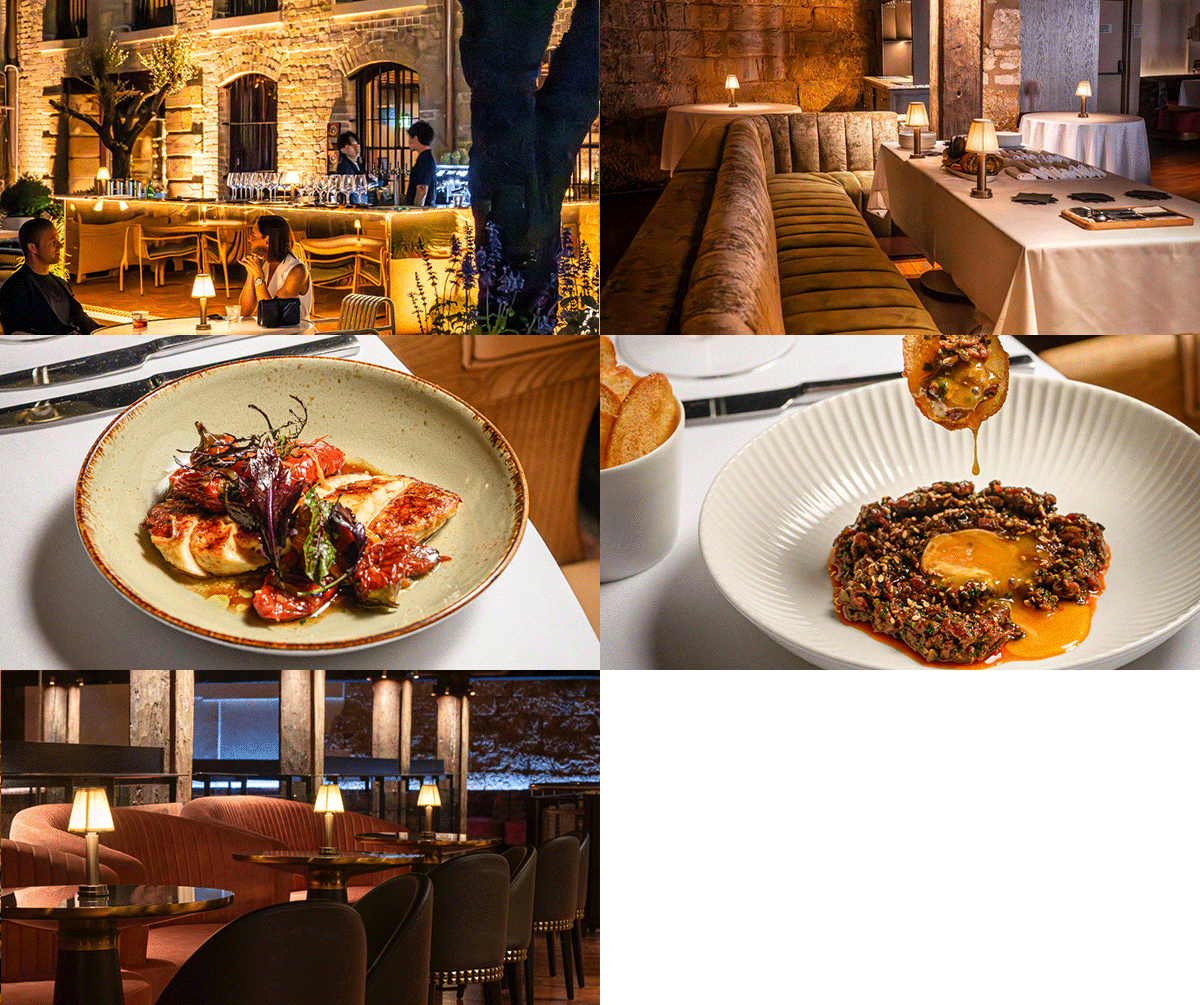
Image: Hunter Group Hpspitality
Big hospitality groups are moving swiftly to shut underperforming fine dining venues, as rising costs and softer consumer spending force a shift towards more familiar cuisines with broader appeal and more reliable margins.
Hunter Street Hospitality, backed by Metrics Credit Partners, will close its two-level fine dining restaurant The Dining Room at The Rocks in February, less than nine months after its highly anticipated launch. The group, which also operates Rockpool Bar & Grill and Spice Temple, will replace the venue with two new concepts aimed at a wider audience.
The ground floor will reopen later in February as Lebanese restaurant Sahtein, while the upper level will be reworked into a French restaurant slated to open in April. While the heritage-listed interiors will remain, menus, tableware, uniforms and staffing will all be overhauled to suit the new offerings.
The move reflects a broader recalibration across the hospitality sector as operators contend with higher input costs and reduced discretionary spending.
House Made Hospitality is taking a similar approach. In February, the group will close Baptist Street Rec Club, a retro cocktail bar with Thai-inspired small plates in Redfern, just one year after opening. It will reopen as Vitelli’s Upstairs, an Italian restaurant targeting a more mainstream customer base.
The speed of these closures highlights how unforgiving the current operating environment has become. Rising produce and labour costs, combined with a pullback in dining out, are compressing margins and prompting operators to exit riskier concepts earlier than they might have in the past.
According to Australian Securities and Investments Commission figures published in July, hospitality insolvencies jumped 48 per cent to 2475 in the year to June, up from 1668 the year before.
House Made Hospitality director Justin Newton said new venues now had just four to six months to meet financial targets if they were to be considered viable — a significantly shorter runway than in previous years. As a result, many groups are opting for steakhouses or Mediterranean cuisines such as Italian and Greek.
“It’s disheartening because the financial pressures have become so much that you can’t afford for a concept not to work,” said Newton. “The creative ability of hospitality operators to produce something really niche has become restrained. “It used to be easy to differentiate yourself from the market with a bespoke niche concept. But how do you differentiate yourself in the market with a concept where there are many others?”
The closure of Baptist Street Rec Club follows other pivots within House Made Hospitality. Its southern French restaurant Martinez, which opened in October 2023 and quickly earned a hat from The Sydney Morning Herald’s Good Food Guide, dropped its dining component last year to operate solely as a bar. At Promenade Bondi Beach, the group rebranded its restaurant arm as Greek eatery Etheus less than 18 months after opening.
Hunter Street Hospitality chief executive Frank Tucker said large-scale fine dining venues were increasingly difficult to sustain, particularly those reliant on high volumes to support their cost base.
“We were aggressive. The Dining Room was a 350-seat restaurant – a big place – that was an aggressive play where the food was wonderful. But it didn’t resonate with people in the sense of doing that volume of business,” said Tucker.
He pointed to the group’s success with 24 York, which pivoted from The Bavarian into a minimalist steak frites restaurant offering a single main course.
The venue is on track to generate $10 million a year in revenue, serving more than 3000 steaks a week.
“But we have the team to make such a move. We did it last year with 24 York. It’s not something that anybody would have contemplated. That’s a real restaurant for something where there’s one menu item.”
Hospitality consultant Petrina Baker said rapid closures and reopenings were becoming more accepted by consumers.
“Pivoting or changing a business name and offering used to be the kiss of death, but these days consumers are embracing it,” said Baker.
The trend was underscored last year when chef Neil Perry closed Cantonese fine diner Songbird less than a year after opening, replacing it with Italian restaurant Gran Torino.
“We had 12 months left at Songbird,” said Perry. “You have to make that decision very quickly because you can lose money in restaurants incredibly fast, and so if you keep compounding that, it’s much harder to come back.”
With several high-profile fine dining closures confirmed for early 2026, the shakeout has significantly thinned Australia’s top end. By March, only two of the four three-hatted NSW restaurants listed pre-pandemic are expected to remain.
Jonathan Jackson, 19th January 2026


