




Restaurant 'flips' emerge as survival strategy
Australia's hospitality sector is seeing a sharp rise in restaurant concept pivots, with operators choosing to reinvent rather than shut down as financial pressures reach breaking point.
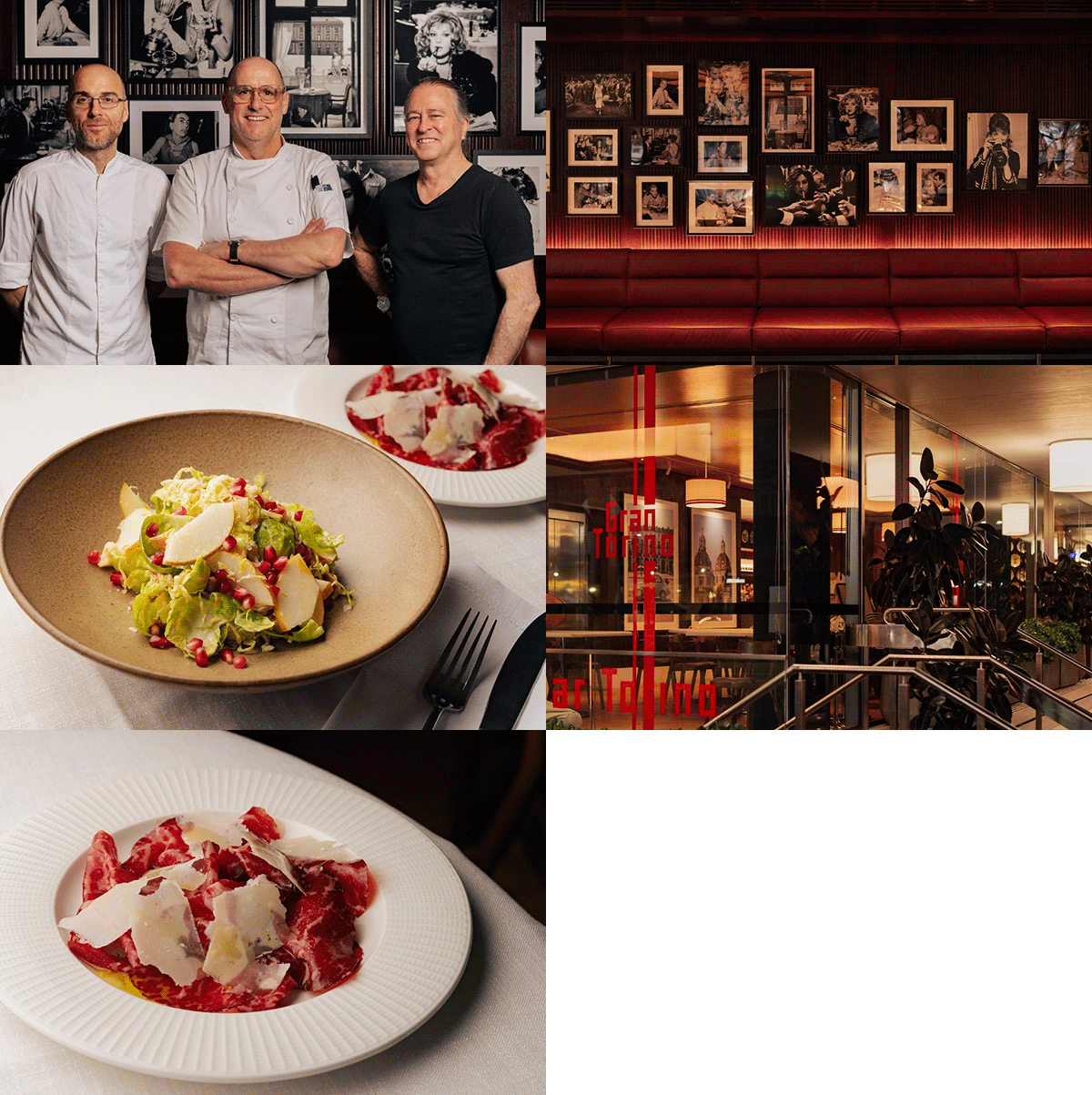
Neil Perry's Double Bay dining precinct has become something of a case study. The veteran restaurateur has cycled through multiple reconfigurations in the past year. The most recent is Roman-style pizzeria Pizzeria Sotto, opening June 3.
"Bar Torino hasn't found the rhythm we hoped for. Rather than hold onto something that isn't quite landing, now feels like the right time to reset," Perry said
The trend extends well beyond one operator. Across Sydney, venues including Baptist Street Rec Club, Sol Bread & Wine and The Dining Room in The Rocks have all relaunched under new concepts within the past 12 months.
Data from CreditorWatch shows 10.4 per cent of food service businesses closed over the past year, the highest failure rate of any sector in the economy, while Lightspeed's 2026 State of the Hospitality Industry Report found 52 per cent of operators flagged rising food and supply costs as a significant challenge.
For many, the pivot is less a creative choice than a commercial imperative.
Justin Newton, director of House Made Hospitality, told the SMH: "We couldn't allow it to fail because we'd just go under." With long-term leases locked in at competitive Sydney locations, operators are moving faster than ever, giving struggling concepts less runway before pulling the trigger on change.
"Unfortunately in this day and age, there's not as much time to let a concept ride," Newton said. "We need something to fire pretty quickly."
Perry reached the same conclusion with Song Bird, his Cantonese restaurant that earned a Good Food Guide hat within months of opening before being replaced by Italian diner Gran Torino. "I made the call pretty quickly," he said. "It's important not to run out of money before you can afford to do these things."
Reinvention doesn't come cheap. Newton said one recent conversion cost his group a six-figure sum and success is far from certain. "I suspect that 60 or 70 per cent of those that flip are going to end up dying on the vine, in any case," Perry said.
A deeper concern is the drift toward perceived safe cuisines — Italian, French and Greek — and the homogenisation this risks producing. "If everyone goes after the same safety net, there'll be no experimental restaurants," Newton warned. "There'll be no fine dining."
The silver lining is a long-overdue shift toward commercial literacy within the industry.
"This is a passion for us, but it's also a business," said Elvis Abrahanowicz of Paisano & Daughters.
Perry echoed the sentiment "There's just a lot more savvy business people in the industry, and the industry is run more and more by a business plan, which it always should have been."
Jonathan Jackson, 18th May 2026


