




Regional NSW restaurants are closing one after the other
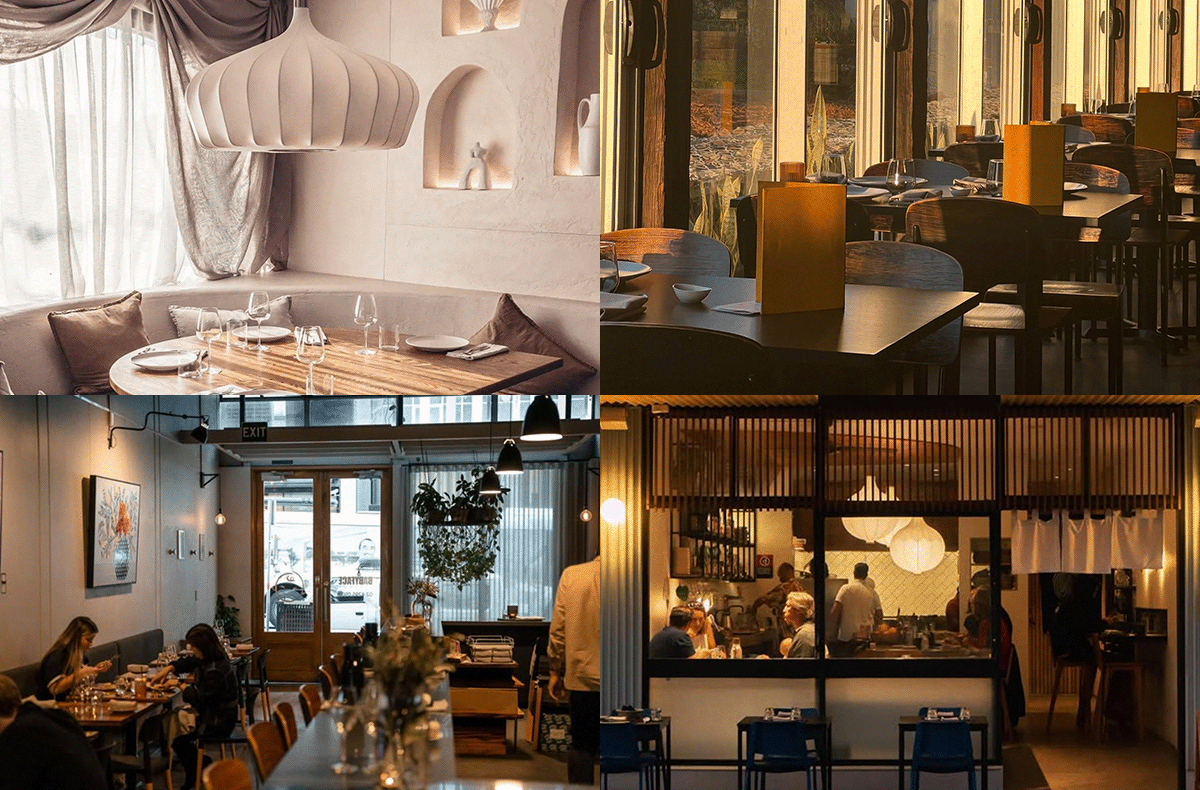
Images: Yellow Billy Restaurant, Baby Face Kitchen, Valentina Merimbula, Roco Ramen & Sake Bar
More than 60 high-profile restaurants, bars and cafes have closed across regional New South Wales in the past 18 months, as the post-COVID dining boom gives way to a brutal reckoning driven by rising costs, falling foot traffic and squeezed consumer spending.
The closures span the length of the state, from dining institutions such as Yellow Billy Restaurant in Pokolbin and Babyface Kitchen in Wollongong, to newer hatted venues including Valentina in Merimbula and Roco Ramen & Sake in Brunswick Heads, as well as popular local bars and cellar doors. The pattern, identified by the SMH's Good Food, points to a structural shift rather than isolated misfortune.
ASIC recorded a 57 per cent rise in insolvencies across the food and accommodation sector in the 12 months to March, and a 2026 CreditorWatch report found more than one in ten restaurants and cafes collapsed over the past year — the highest failure rate of any industry in Australia.
Chef-restaurateur Troy Rhodes-Brown, owner and operator of two-hatted Muse Restaurant in Pokolbin, described the conditions facing operators to the SMH as relentless. "Pretty much every conceivable cost has increased substantially — labour, food, utilities, insurance, compliance, freight and maintenance — alongside a squeeze on guests' discretionary spending," he said. "It creates something of a perfect storm."
Rhodes-Brown acknowledged his own venue's 17-year track record had built resilience others couldn't rely on. "But where I really feel for the industry is the independent operators who have only been trading for a few years," he told the SMH. "Opening a restaurant often means putting everything on the line — servicing start-up loans, building a trusted brand from scratch, learning through inevitable mistakes — all within a framework that leaves very little room for error."
The challenges are amplified outside the capital. Restaurateur Kat Harvey-Barakat, who relocated from Melbourne to the Northern Rivers in 2022 to open burger concept Slicks and Middle Eastern restaurant Baraka.
"It is, hand over fist, a million times more challenging to operate a restaurant in a regional area than it is in a capital city," she said.
Harvey-Barakat said customers were more transient, supply chains were longer, and a single weather event was capable of wiping out an entire evening's trade.
Chef Manuel Tersigni had a similar experience after moving from Sydney to open Rosetta Deli & Bistro in Mullumbimby in 2023. "When your profit margins are so thin, you rely on volume, but that's the twist," he told the SMH. "The problem in these areas is that there's not enough volume, so you hit the ceiling very quickly." Tersigni closed Rosetta's in 2025 and returned to Sydney to lead CBD restaurant Margot Osteria.
For Josh and Jess Gregory, the decision to close their Newcastle seafood restaurant Thermidor Oyster Bar & Brasserie in December was ultimately a personal one. Facing a projected shortfall of more than $100,000 to survive the winter slump, and weighing that against the family home they would have needed to borrow against, Josh Gregory told the SMH the calculus was stark. "Do we want to double down and borrow more money against our home, and run the risk of losing everything?" he said.
Andrew Burns, who closed Babyface Kitchen in Wollongong after a decade in December, offered a more pragmatic verdict on the regional landscape. "If I was ever going to open a restaurant again, it would be in the city," he told the SMH.
"Every time I go to a decent restaurant in Sydney, it's full. It might be winter, it might be a Sunday. That's just not the case in Wollongong."
Jonathan Jackson, 14th April 2026


