Your Commercial Refrigeration: Why Airflow Matters
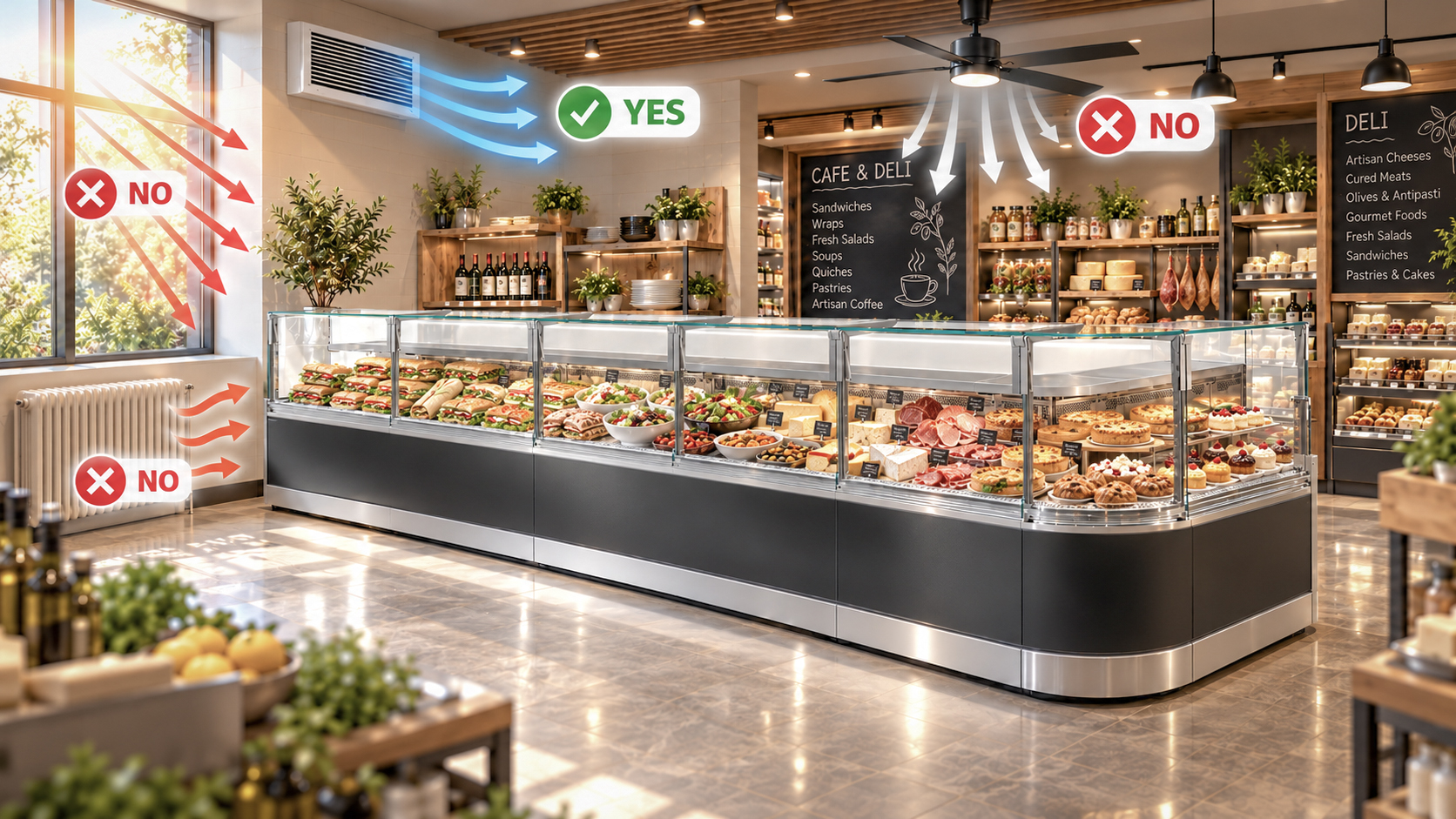
Choosing the right commercial refrigerator or refrigerated display case is only part of the decision. Where you install it can have a significant impact on how well it performs, how much energy it uses and how reliably it maintains the required temperature.
Two identical refrigerated cabinets can perform very differently depending on their location. Exposure to sunlight, surrounding heat, poor ventilation and nearby air movement can all affect refrigeration performance.
For cafés, restaurants, hotels and other hospitality businesses, considering these factors before installation can help prevent temperature issues, unnecessary energy consumption and avoidable service calls.
Keep Refrigeration Away from Heat Sources
Commercial refrigeration equipment is designed to maintain food and beverages at specific temperatures, but its ability to do so depends on the surrounding environment.
Positioning a refrigerated cabinet beside an oven, grill, dishwasher or other heat-producing equipment increases the workload on the refrigeration system.
Direct sunlight can have a similar effect, particularly on glass-door refrigerators and refrigerated display cabinets positioned near large windows.
Allow Room for the Equipment to Breathe
Refrigeration doesn't just create cold air. It removes heat from inside the cabinet and, in the case of self-contained air-cooled equipment, releases that heat into the surrounding space.
This process relies on adequate airflow around the condenser area.
If refrigeration is pushed into an enclosed space without sufficient ventilation, warm air can accumulate around the equipment. The condenser then has to operate in increasingly difficult conditions.
Air Conditioning Helps, but Direct Draughts Can Cause Problems!
A well-air-conditioned environment generally provides more favourable operating conditions for refrigeration equipment.
However, the direction of airflow is just as important as the room temperature.
Air discharged directly across a cabinet from ceiling fans, air-conditioning outlets or doorways can disturb this airflow.
Consider How the Space Operates Throughout the Day
Kitchen temperatures rise when cooking equipment is operating. Entry doors open more frequently, dining areas become busier and air-conditioning systems respond to changing heat loads.
These conditions matter when choosing where refrigeration equipment will operate.
It is also worth considering how staff will use the cabinet. Loading warm products, overstocking shelves and blocking internal air vents can all affect temperature recovery.
Check the Ambient Temperature Rating
Before purchasing, check the equipment's specified ambient operating conditions and climate classification.
This is especially important in Australian hospitality environments where kitchens, outdoor service areas and spaces with limited air conditioning can experience elevated temperatures.
_________________________________
Good positioning, adequate ventilation and suitable operating conditions help maintain food quality, manage energy costs and extend equipment life.
Author: Baker Refrigeration
October 23, 2026