




Is Smith Street losing its edge?
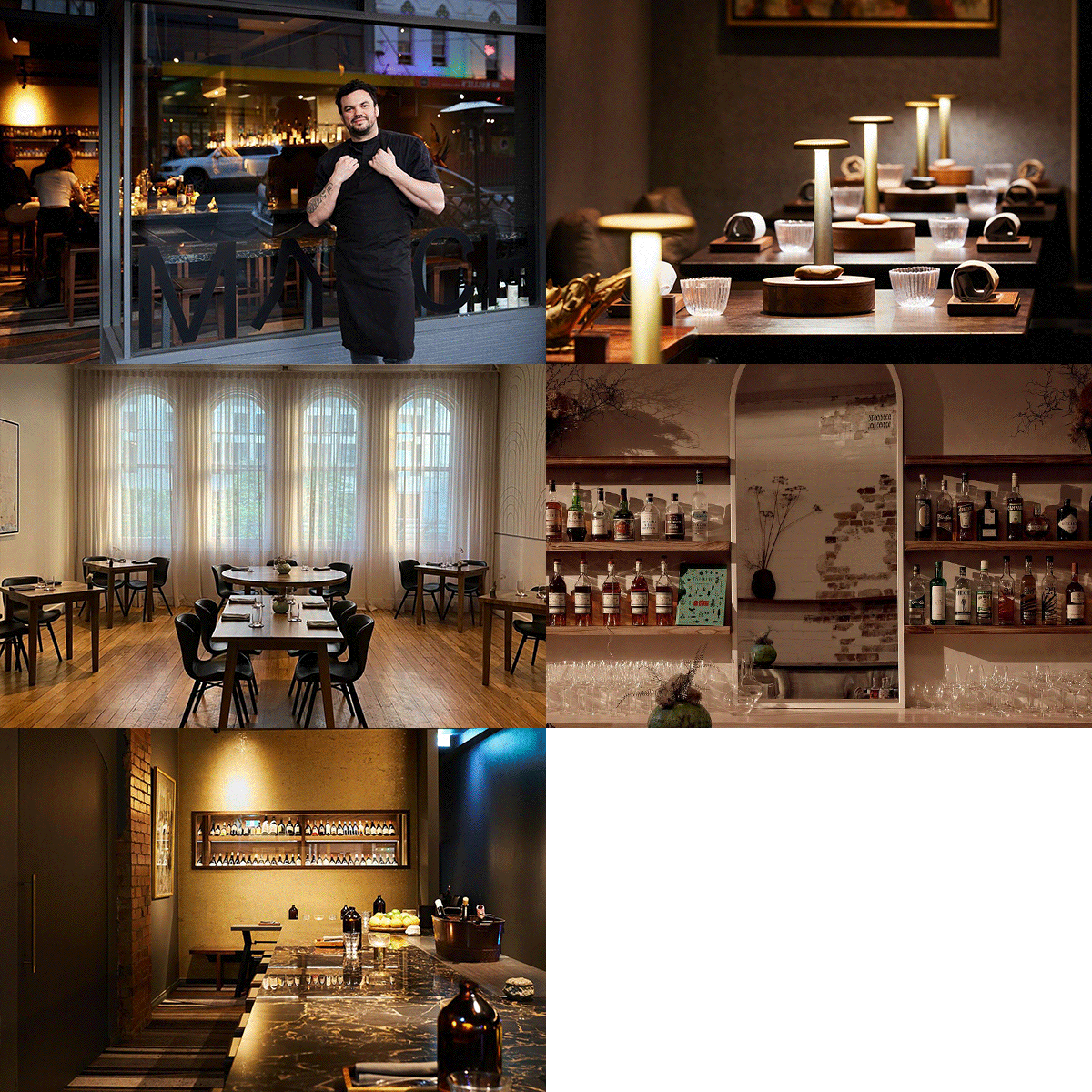
Image: IDES
Once one of Melbourne’s most exciting and gritty food strips, Smith Street is starting to feel very different. With decade-old fine diner Ides preparing to close and fast-casual chains and major retailers moving in, questions are being asked about whether the street’s identity is being diluted.
Back in 2014, Good Food declared Smith Street in the midst of a dining revival. Long known for casual noodle houses, pasta joints and bargain eats like “three-buck spanakopita”, the strip was beginning to attract a new wave of operators. Openings such as Shop Ramen and Messina’s first Melbourne store signalled a shift, bringing pared-back branding and a sharp focus on doing one thing well.
More ambitious venues soon followed. Scott Pickett opened Saint Crispin (now Smith Street Bistrot), Victor Liong launched Lee Ho Fook, and in 2016, when Lee Ho Fook moved into the CBD, its former site became Ides – the high-concept restaurant led by chef Peter Gunn.
A decade on, Ides is preparing to close. On March 14, exactly 10 years after opening, the restaurant will host its final dinner service. As diners rush to secure a last table, Gunn has been reflecting on what made Ides work on Smith Street, and what the future may hold for the strip.
When Ides opened, Smith Street still carried a roughness that defined it for generations. A commercial hub for more than 150 years, the strip has moved through cycles of boom and decline but has long been shaped by diversity and grit.
“I think we had a natural fit for the area,” Gunn told Good Food. “We didn’t take ourselves too seriously. The restaurant was f---ing shiny, sure – a diamond in the rough – but I lend myself to the business owners and the people in the area quite well.”
Change was already underway back then, but it has accelerated in recent years. Several major apartment developments are planned by DKO Architecture, CASA Property and Milieu, and the long-standing Fitzroy Woolworths at 243 Smith Street closed permanently on January 31, now earmarked for redevelopment.
“When they knock down these old buildings and put up new apartment blocks that are required to have retail outlets down the bottom, and rents are ridiculous, that’s when we see this influx of restaurants that you wouldn’t associate with Collingwood or Smith Street,” Gunn said.
For much of the past decade, Smith Street’s food offering remained largely independent, with only a handful of chains. That balance is shifting. A KFC is moving into the former Fonda site, Guzman y Gomez is on the way, and major retail brands such as Lululemon have arrived.
There have also been short-lived venues trying to trade on the suburb’s reputation without understanding it. Gunn points to places like Blk and Whyte and Canadian plant-based chain Copper Branch, both of which closed quickly.
“I don’t know how to say this politely; you can’t force yourself into Collingwood,” Gunn told Good Food. “You can’t acquire Fitzroy or Collingwood grit just by having a business idea. You’ve got to have a bit of personality and make-up that fits in before you just show up and think you can be a hit.”
While Gunn still sees strong openings, particularly in bars and casual venues, he believes Ides’ closure reflects a broader shift in dining culture.
“I don’t believe fine dining’s dead,” he says. “There’s just a desire for less of it, not more.”
What is disappearing, he argues, is the middle ground. “I think that sort of price point is fading,” he says. “Set menus are either the highest of the high, or lowest of the low. I believe middle-range restaurants are the ones suffering the most.
“The edge of the street still exists,” Gunn says. “But maybe in a few years’ time, as these bigger brands push in, that’ll take some of the culture with it.”
Jonathan Jackson, 4th February 2026


