



 Sydney Water flags up to 12,000 south-west food outlets for alleged illegal grease discharges
 Sydney Water flags up to 12,000 south-west food outlets for alleged illegal grease discharges
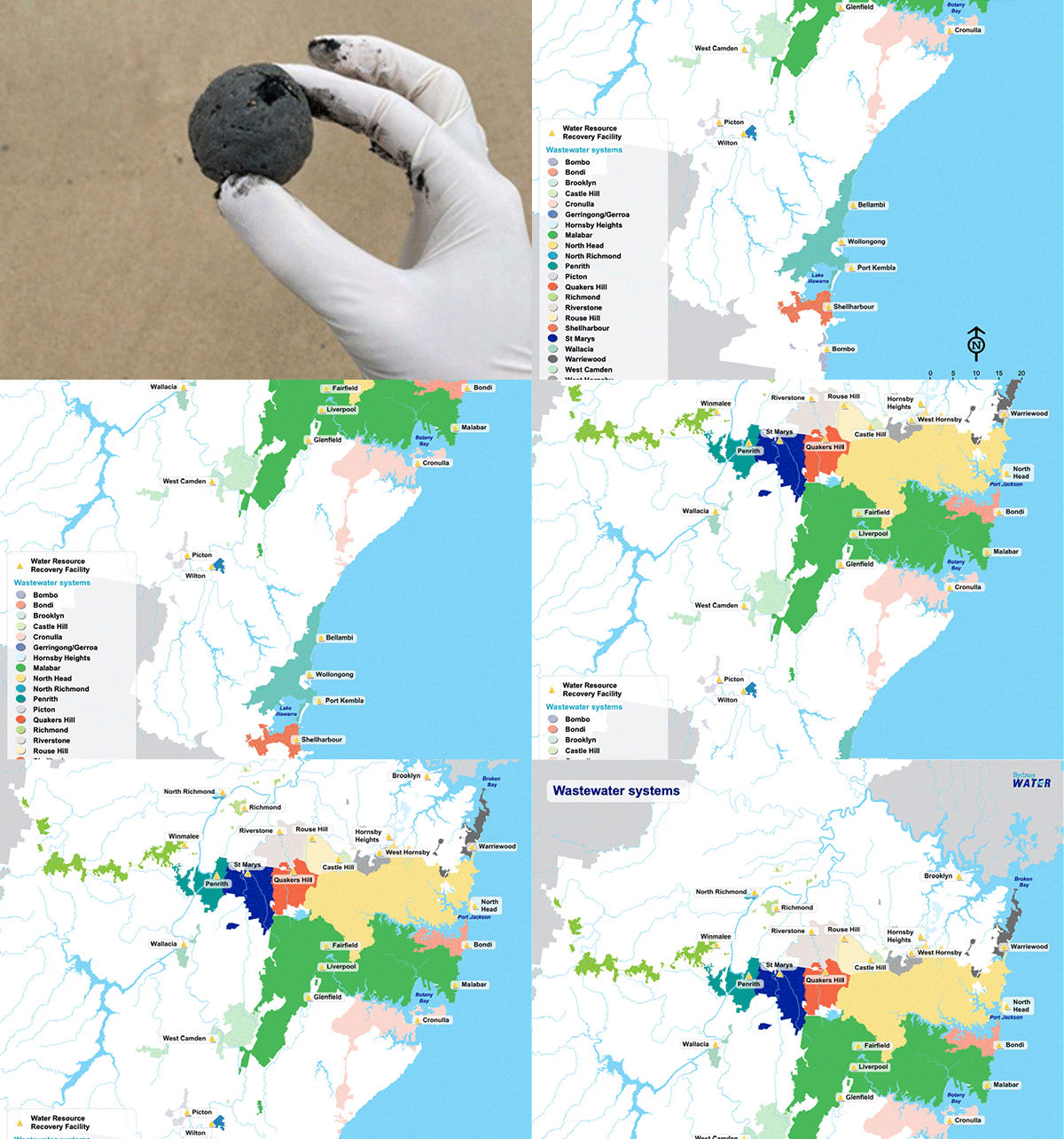
Image: Randwick City Council/Sydney Water
Sydney Water says as many as 12,000 food businesses in the city’s south-west may be illegally sending fats, oils and grease (FOGs) into the sewer network that feeds the Malabar treatment system — the same catchment linked to a stubborn fatberg believed to be “as big as four buses”.
The warning comes amid claims that growing numbers of restaurants and food manufacturers are operating without adequate grease traps or waste controls.
Critics say the problem has been compounded by changes made to Sydney Water’s Wastesafe program in 2017, including digital reporting and fewer on-the-ground inspectors — allegedly making it easier for some operators “to fly under the radar”.
Attention on grease management intensified after black, ball-shaped debris washed up on Coogee Beach in October 2024, with further beach closures following in January 2025. The suspected scale of non-compliance was outlined in an internal Sydney Water report into the debris balls, which was said to have been obtained by Guardian Australia.
The August report pointed to a major build-up of FOGs in an inaccessible section of the Malabar plant at the start of the deep ocean outfall (DOOF), which carries primary-treated wastewater 2.3 km offshore. It suggested the build-up later broke apart after changes in pumping pressure, sending waste material out to sea before it was pushed back towards Sydney beaches by swell and wind.
It concluded: “The hypothesis is that the accumulation of this FOG correlates with a substantial increase in both FOG and volatile organic compounds in the influent coming into the plant. Increases are calculated as 39% for FOG … and 125% for VOCs over the past 10 years.”
The report also stated: “A recent database analysis has identified that there could be up to 12,000 retail food businesses operating within the Malabar catchment without the necessary approvals from Sydney Water and that these could be significant contributors to FOG loads.”
Wastesafe was introduced in 1991, requiring food businesses to install Sydney Water-approved grease control equipment and maintain regular pump-outs, backed by inspections to enforce compliance.
However, industry sources say the 2017 shift to a new digital tracking system changed how grease trap pump-outs were monitored. They claim transport companies were required to log collections by scanning barcodes at customer sites and submitting removal volumes via a form — while inspection activity was reduced at the same time.
Brett Lemin, executive director of the Waste Contractors and Recyclers Association of NSW, said fewer inspections were being carried out than in the past.
“Sydney Water do have inspectors, but not at the rate they used to,” Lemin said.
He added that enforcement can be difficult when businesses aren’t formally in the system. “It’s very hard to police people who aren’t even registering for the Wastesafe system,” Lemin said. “There are great people in the food industry who are doing the right thing, but it’s very easy to fly under the radar.”
Sydney Water, meanwhile, acknowledged a shift in service arrangements in 2017 but said the program’s fundamentals remained the same.
“However, the program’s core purpose, functions and compliance obligations remained unchanged,” a spokesperson said. “Sydney Water currently has 12 field inspectors who work directly with retail food trade waste customers.”
The utility also noted it provides multilingual factsheets to help businesses understand and meet grease and trade waste requirements.
Jonathan Jackson, 22nd January 2026


