




Michelin Guide to make Australian debut in South Australia
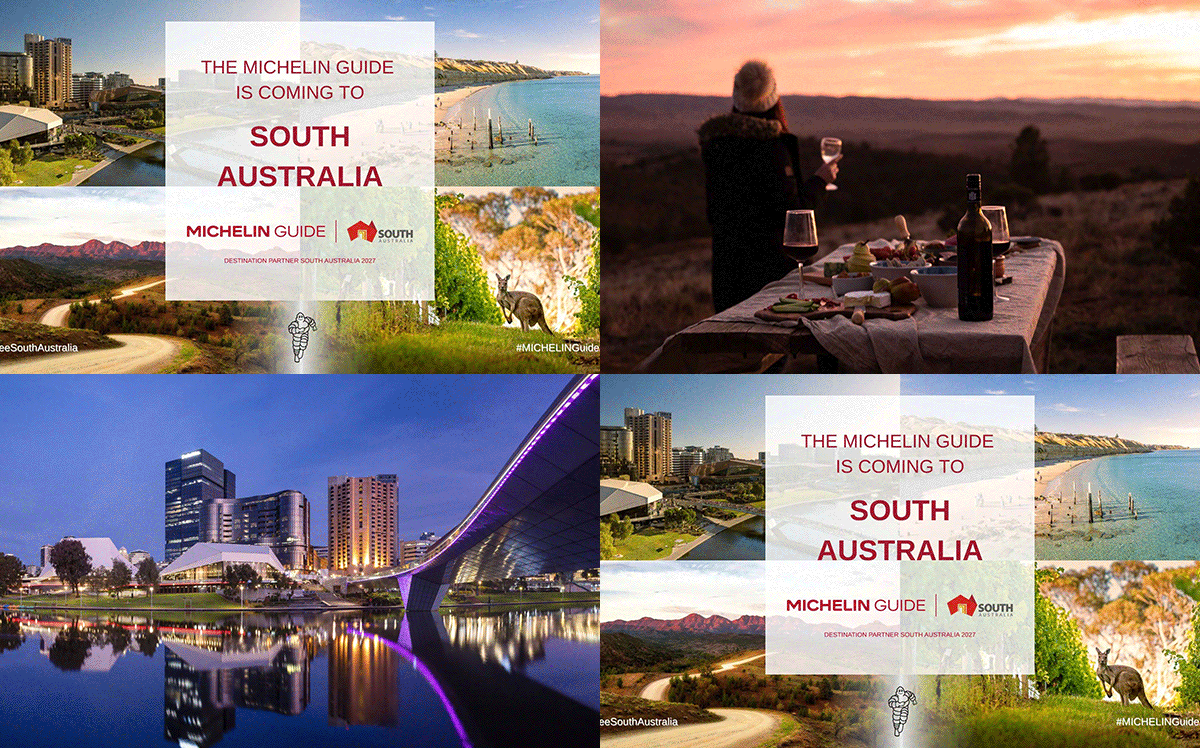
The world's most coveted restaurant rating system is heading Down Under for the first time, with South Australia securing a deal to host the inaugural Australian edition of the Michelin Guide — a partnership that federal tourism bodies had previously walked away from.
The Michelin Guide South Australia 2027 will be unveiled at an Adelaide launch event in October, with inspectors fanning out across the state to assess fine dining venues under both the star and Bib Gourmand value-dining frameworks. Results will be published exclusively online.
Tourism Australia twice declined to broker a national arrangement, most recently rejecting a $40 million, five-year proposal that would have begun at $4 million annually before scaling to $7.5 million per year, citing a preference to promote Australian restaurants within existing budgetary frameworks. South Australia's state government ultimately stepped in, though the precise cost of its agreement with Michelin has not been disclosed.
South Australia's Minister for Tourism Emily Bourke framed the announcement as a watershed moment for the state's food and wine identity.
"Our state sits atop the nation's foodie must-visit list. South Australia offers a vibrant calendar of food festivals and wine events, celebrating culinary excellence, from city dining experiences to regional gourmet celebrations, and we look forward to sharing this with Michelin Guide readers around the world," she told The Age.
For context on the investment scale, comparable partnerships internationally have carried significant price tags — Tourism New Zealand paid roughly $2.5 million in its first year, while Thailand's tourism authority committed around $6.7 million for its inaugural guide.
Michelin arrives into a market where restaurant credibility has long been shaped by The Sydney Morning Herald and The Age Good Food Guides, which have rated Australian dining since 1984.
The guides' chef's hat system is widely regarded as the local equivalent of Michelin's star ratings, with three hats considered comparable to three Michelin stars internationally.
SMH Good Food Guide co-editor Callan Boys said he welcomed the development while urging scrutiny of the return on public investment. "For all its perceived faults of being an outdated scoring system and preferring hifalutin French-style dining over how most people want to eat these days, Michelin has always been rigorous in its review process."
But Boys also posed pointed questions about impact: "Will it actually draw significant numbers of tourists to South Australia, and increase local spend at restaurants with one or more Michelin stars? Or will it mainly exist to stroke the egos of a few chefs and winery owners? The government should absolutely support the hospitality industry, but that investment should lead to measurable, positive impact for restaurants, bars and cafes across the board, not a relatively small number of 'Michelin worthy' destinations."
The Australian Restaurant and Cafe Association offered a warmer reception, with chief executive Wes Lambert praising the South Australian government for backing the sector during a period of acute financial strain.
"At a time when restaurants and cafes continue to face enormous pressures from rising wages, energy costs, rents, insurance and workforce shortages, announcements like this are critically important because they reinforce hospitality's value to Australia's economy, tourism sector and cultural identity."
Lambert also called for the Michelin model to be rolled out nationally to position Australia as a serious player on the global dining stage.
Jonathan Jackson, 13th May 2026


