




Melbourne hotels hit by F1 no-shows amid Middle East crisis
Images: Grand Prix, Etihad Airways, What's On Melbourne
Melbourne's hospitality sector is bracing for significant revenue losses as no-show rates climb ahead of this weekend's Formula 1 Australian Grand Prix, with the fallout from US strikes on Iran sending shockwaves through international travel into the country.
Retaliatory missile strikes on or near major aviation hubs in Dubai, Abu Dhabi and Doha, is forcing F1 teams and thousands of ticketed spectators to look for alternative routing through Asia. Approximately 30 aircraft operated by Middle Eastern carriers Etihad, Emirates and Qatar Airways are currently on the ground in Australia after 26 planes were diverted to airports across the country on Saturday night — with both Emirates and Etihad subsequently announcing limited resumption of departures from their respective hubs.
The crisis is compounding a problem unique to no-shows: unlike cancellations, which free up inventory for resale, guests who simply fail to arrive leave properties unable to reallocate rooms to the surge of stranded travellers seeking last-minute accommodation near major airports.
Accommodation Australia chief executive James Goodwin explained to the Australian Financial Review (AFR) the operational bind facing properties. "The concern with the no shows is that with the extra demand for accommodation, particularly at those properties near major airports, the hotels are unable to accommodate those new guests needing a place to stay," Goodwin said.
He confirmed the impact is being felt across the country's major city markets, predominantly Sydney, Melbourne and Brisbane, since the weekend. "We know that there's a number of people certainly disrupted, and it's impacting across the tourism and the travel sector," Goodwin said.
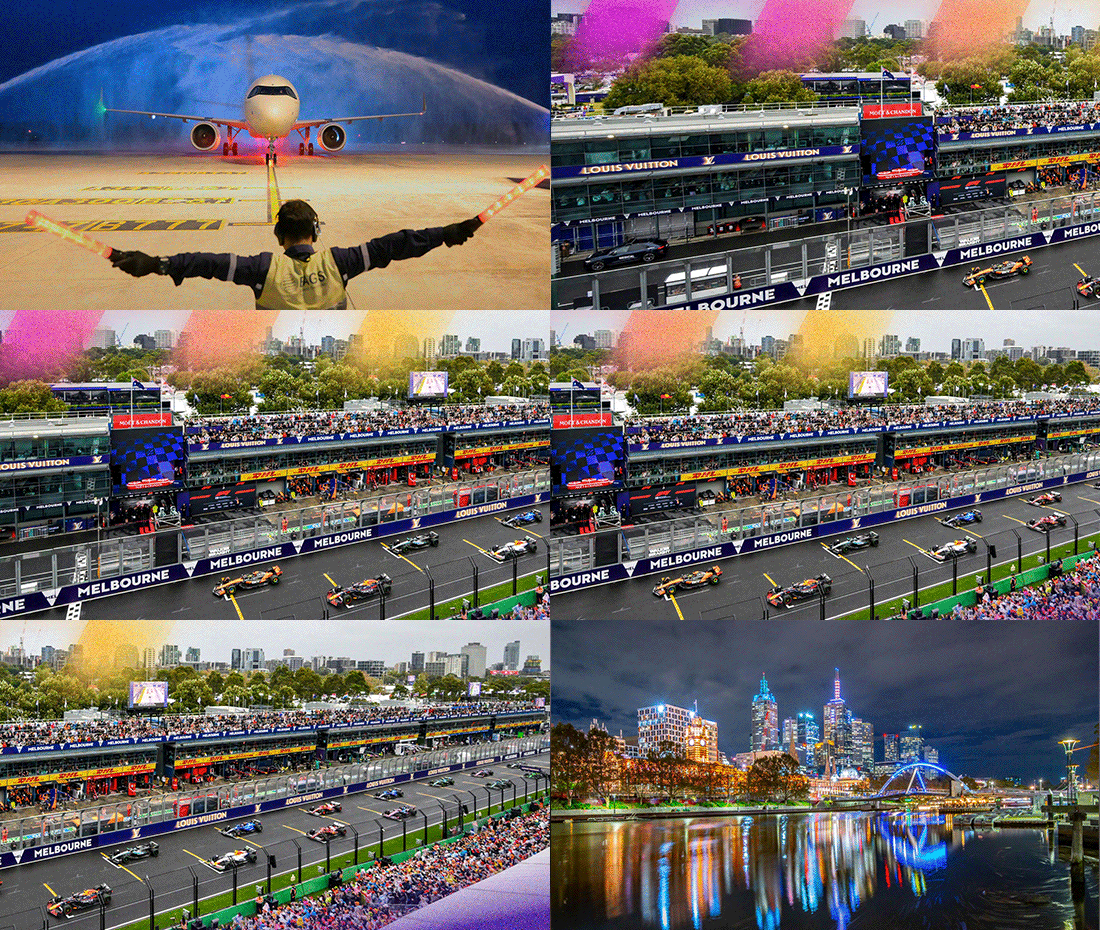
Melbourne is, however, bearing the sharpest blow. With the Grand Prix — sponsored by Qatar Airways, whose Doha base remains closed — drawing a significant international contingent, the city faces the prospect of a major shortfall in visitor arrivals at one of its most commercially critical events of the year.
"Melbourne is the biggest worry for the sector," Goodwin said. "The Formula 1 is one of the biggest events in the calendar, if not the biggest for the year. We know that the crews and the teams are arriving and … everyone is confident that the race will go on. The concern, though, is whether all those spectators will still be able to get here, and that will be really concerning if we can't meet those expected numbers. We're very concerned because it is such a big event for Melbourne."
The broader tourism pipeline is also under strain. Australian Travel Industry Association chief executive Dean Long noted that while domestic travel remains relatively stable, inbound international bookings are being disrupted across Asian gateway routes as passengers seek to bypass the affected Middle Eastern corridors.
"You've got 11 per cent of passengers going through the Middle East and there's probably the equivalent through Asia. People are postponing rather than cancelling their travel so far, and tour operators are doing a really good job for anybody who was impacted across this week in terms of waiving change fees," Long said.
On the carrier side, Qantas moved to ease outbound capacity pressure by announcing its flagship QF9 Perth-to-London service would add a Singapore stopover, enabling an additional 50 to 60 passengers per flight to exit Australia while Middle Eastern airspace remains constrained.
Both the Australian and US governments have urged citizens in the affected region to depart via commercial flights as soon as possible, adding further urgency to an already stretched international aviation network.
Jonathan Jackson, 4th March 2026


